
Sunscreen Is the Only Product That Earns the Hype
If you took every dollar spent on anti-aging skincare in this country and moved it into sunscreen, the average face would look better in twenty years. That's the least controversial sentence in dermatology and the hardest one to sell, because it involves doing something boring every single morning for decades.
I resisted it for years. It felt like a hedge, like flossing. Then I read enough about photoaging to understand that most of what people are paying to correct is damage that a fifteen-dollar bottle would have prevented, and I got irritated enough to change my habits.
What the sun actually does
Two bands matter for skin. UVB is the one that burns you, strongest in summer and in the middle of the day. UVA penetrates deeper, stays roughly constant across seasons, passes through window glass, and is the major driver of the changes people call aging: loss of elasticity, uneven pigment, the crepey texture that no cream reverses.
That UVA constancy is the part people miss. It's why "I don't burn" isn't protection, why an overcast January morning still counts, and why the side of your face nearer the car window ages faster than the other one. Look for it in older drivers sometime — it's unmistakable, and it's the most persuasive argument for daily sunscreen I know.
Why this one product beats everything else
Because prevention and correction aren't symmetrical. Preventing pigment from forming is cheap and reliable. Removing pigment that's already there takes lasers, peels, prescription products, months of effort, and often produces a partial result that needs maintaining.
The same asymmetry runs through everything on this site. Collagen you didn't lose doesn't need rebuilding. A line that never etched doesn't need filling. Sunscreen is the only thing on the shelf that operates on the prevention side of that equation at a scale that matters.
Retinoids are the closest runner-up, and they work on the correction side, slowly. Everything else is a rounding error by comparison.
Doing it properly
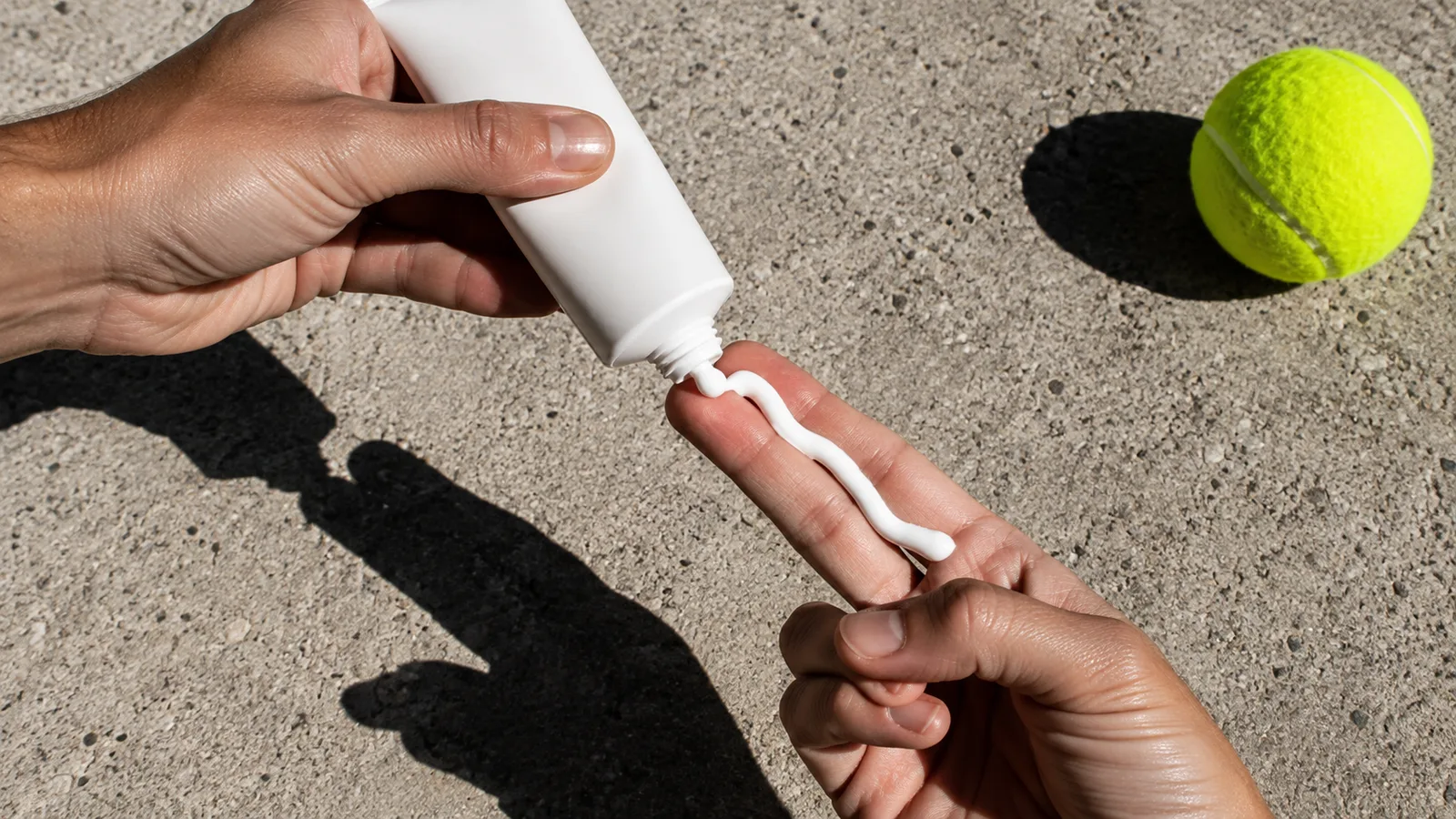
Quantity. This is where nearly everyone fails. The SPF number on the bottle comes from testing at two milligrams per square centimeter, which for a face and neck works out to roughly two fingers' length of product. Most people use a third of that, which means an SPF 50 applied thinly is behaving more like an SPF 15. Use more than feels reasonable.
Coverage. Ears, the sides of the neck, the back of the neck if your hair's up, the tops of your hands. The forgotten spots are exactly where the damage shows first.
Reapplication. Every two hours if you're outdoors, after swimming, after sweating. If you're inside all day, the morning application is doing most of the work and you don't need to be neurotic about it.
Formulation. The best sunscreen is the one you'll actually put on daily. Mineral or chemical, gel or cream, tinted or not — all of it is secondary to whether the bottle is empty in two months. If it stings, pills under makeup, or smells like a pool, you'll skip it, and a skipped SPF 50 protects nobody.
What SPF doesn't tell you
The number refers to UVB protection only. For UVA you want "broad spectrum" on the label, and in practice that's most things sold today. Don't spend much energy chasing SPF 100 over SPF 30 — the difference in blocked radiation is small, and the difference in how thoroughly you apply it is large.
Also worth knowing: makeup with SPF in it rarely counts. The amount you'd need to apply to reach the rated protection is far more foundation than anyone wears.
Living here, specifically
The waterfront is the most exposed place in town and the one people spend the most casual outdoor time in. Water and pale concrete both bounce light back up at you, which means the underside of your chin and your nose collect more than you'd expect on a walk along the river.
Shade on the Boulevard is patchy. The uphill streets get sun most of the day in summer. And the days people most reliably skip sunscreen — bright, cold, February — are days with plenty of UVA in them.
If you want to know what's happening outside before you commit to a walk, the local coverage at Weehawken Daily Voice | Your Local News for Weehawken, New Jersey and the township's own notices at Weehawken Township both do a better job of telling you what's open and what's on than I could.
When to bring in a provider
Once you've had the habit for six months and you want to deal with the damage that's already there.
That's the sensible order. Fix the leak first, then bail out the boat. Starting a pigmentation treatment while you're still getting unprotected sun is paying to correct something you're actively continuing to cause.
When you're ready for that step, one nearby option is Ethos Aesthetics + Wellness, over in Hoboken, with a physician running the show. Wherever you go, the thing worth checking before you book is whether the consultation starts with your habits or with their menu. A provider who asks what you're using daily before proposing anything is one who understands the order of operations. One who goes straight to a package has a different priority.
For confirming a business is a real, established local operation, directories like the New Jersey Chamber of Commerce will do. For everything else, ask the questions.
Put it on tomorrow morning. Use twice as much as feels sensible. That's the whole intervention.